

How Loose Teeth Led to a Diabetes Diagnosis
Sometimes, your teeth reveal health problems before the rest of your body does.
This was exactly what happened with Mr. Vinod Jadhav, a school teacher who visited Dr. Swapnil Pande because of loose teeth. He had no idea that the real problem was uncontrolled diabetes and severe Vitamin D deficiency.
The most surprising part of his story was that he did not experience the common symptoms of diabetes. He did not have frequent urination or other noticeable physical changes. Instead, the first warning sign appeared in his mouth.
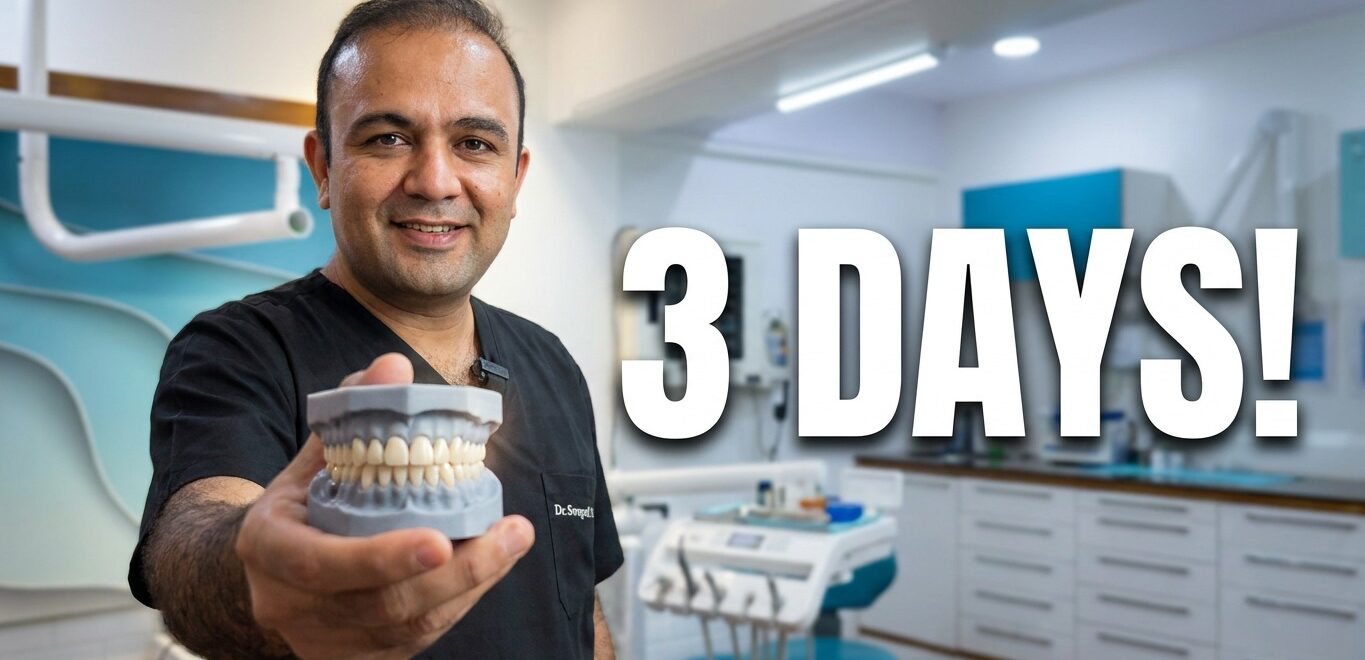
His journey shows why oral health should never be ignored and how timely treatment can lead to a New Smile in 3 Days with an Immediate Dental Implant approach.
Vinod Jadhav’s Journey Began With Loose Teeth
During the consultation, Dr. Swapnil Pande asked Mr. Vinod Jadhav how long he had been dealing with loose teeth.
His answer was straightforward.
He had been living with loose teeth for nearly four to five years.
Despite the condition worsening over time, he did not know that an underlying medical issue was damaging the bone supporting his teeth.
After evaluation, Dr. Swapnil Pande diagnosed him with periodontitis, a disease that affects the gums and jawbone surrounding the teeth.
What Is Periodontitis?
Dr. Swapnil Pande explained periodontitis in a simple way.
Growing old around the age of 60 is considered natural aging. However, if aging-related changes begin much earlier—such as at 25, 30, or 40 years of age—it can be viewed as premature aging.
The same idea applies to oral health.
When the bone supporting the teeth starts weakening at a younger age, it often points to underlying health issues rather than normal aging.
According to Dr. Swapnil Pande, two important causes in this case were:
- Uncontrolled diabetes
- Vitamin D deficiency
These factors combined to severely affect the bone around Mr. Vinod Jadhav’s teeth.
The Medical Reports Revealed the Real Problem
As the reports were reviewed, the underlying cause became clear.
Mr. Vinod Jadhav’s Vitamin D level was approximately 12, indicating a significant deficiency.
His blood sugar readings were also extremely high:
- Fasting blood sugar: 283 mg/dL
- Post-meal blood sugar: 400–450 mg/dL
- HbA1c: 11.2%
Despite these alarming numbers, he did not experience the symptoms many people associate with diabetes.
Instead, his loose teeth became the first indication that something was seriously wrong.
He Never Knew He Had Diabetes
One of the most remarkable parts of this case is that Mr. Vinod Jadhav did not know he had diabetes.
Even with an HbA1c of 11.2 and blood sugar readings far above normal, he did not notice any major physical symptoms.
He did not complain of excessive urination or other typical signs.
According to Dr. Swapnil Pande, the only reason diabetes was discovered was because dental problems prompted a thorough investigation.
This highlights the importance of comprehensive examinations before major dental procedures.
Why Investigations Are Important Before Tooth Extraction
Dr. Swapnil Pande advises that young patients who require tooth extractions should undergo proper medical investigations.
Many people become worried when doctors recommend additional tests, but these evaluations often reveal hidden conditions that explain why the dental problem developed in the first place.
Finding the root cause allows doctors to plan safer and more effective treatment.
In Mr. Vinod Jadhav’s case, identifying diabetes and Vitamin D deficiency changed the entire treatment approach.
Preparing for an Immediate Dental Implant
Mr. Vinod Jadhav’s biggest concern was simple.
He wanted his implant treatment to succeed.
Without teeth, he found it difficult to continue his normal routine and even had to take 10 days off from school.
Although he needed replacement teeth quickly, Dr. Swapnil Pande chose not to proceed immediately.
Instead, the treatment team spent one month bringing his blood sugar under control before surgery.
This careful planning reduced potential risks and improved the chances of successful implant healing.
New Smile in 3 Days Through Immediate Dental Implant Treatment
Once his health parameters improved, Dr. Swapnil Pande proceeded with treatment.
Six dental implants were placed carefully.
An in-house X-ray was taken immediately to verify their position.
One implant required adjustment, after which another X-ray confirmed proper placement.
Measurements were completed, and temporary teeth were provided so that Mr. Vinod Jadhav could smile and function comfortably while healing progressed.
For patients seeking a New Smile in 3 Days, this case demonstrates how an Immediate Dental Implant solution can restore appearance and confidence while still respecting proper healing protocols.
Why Temporary Teeth Were Chosen First
Some patients receive permanent teeth immediately after implant placement.
However, Dr. Swapnil Pande explained why he prefers temporary restorations during the initial healing period.
After tooth extraction, the jawbone naturally shrinks over approximately three months.
If permanent teeth are fabricated too early, gaps may develop as the bone changes shape, allowing food to become trapped.
Waiting for healing to stabilize helps create a more precise final restoration with improved long-term results.
Bone Healing Takes Time
Dr. Swapnil Pande emphasized an important principle.
Bone healing requires around three months, and this natural biological process cannot be accelerated.
Technology may improve precision and planning, but it cannot replace normal human physiology.
Allowing implants sufficient time to integrate with the jawbone contributes significantly to long-term success.
Dr. Swapnil Pande’s Approach to Implant Dentistry
Throughout this case, Dr. Swapnil Pande focused not only on replacing missing teeth but also on identifying and treating the underlying causes of dental disease.
His approach involved detailed investigations, blood sugar management, correction of Vitamin D deficiency, precise implant placement, and careful radiographic verification before completing treatment.
Patients often value this comprehensive planning because it prioritizes safety and long-term outcomes rather than rushing procedures.
Lessons From Vinod Jadhav’s Story
This real-life experience offers several important lessons:
1. Dental problems can reveal hidden diseases.
Loose teeth may sometimes indicate uncontrolled diabetes or other medical conditions.
2. Vitamin D deficiency can affect oral health.
Low Vitamin D levels may contribute to weakened bone support around teeth.
3. Proper investigations matter.
Identifying underlying causes before treatment helps improve outcomes.
4. Health optimization should come first.
Controlling blood sugar before an Immediate Dental Implant procedure may reduce complications and improve healing.
5. Temporary restorations have advantages.
Providing temporary teeth while healing occurs can support both function and aesthetics before the final prosthesis is made.
Conclusion
Mr. Vinod Jadhav’s story is a powerful reminder that serious medical conditions do not always produce obvious symptoms. In his case, loose teeth became the clue that uncovered uncontrolled diabetes and severe Vitamin D deficiency.
With careful planning by Dr. Swapnil Pande, one month of medical optimization, placement of six implants, and temporary teeth during healing, he was able to move forward with confidence toward a New Smile in 3 Days through an Immediate Dental Implant approach.
For anyone considering dental implants, this case highlights the importance of comprehensive diagnosis, individualized treatment planning, and addressing overall health before surgery to achieve the best possible outcome.


Leave a Comment